The Gut-Brain Connection: Understanding Gastrointestinal Dysfunction After TBI
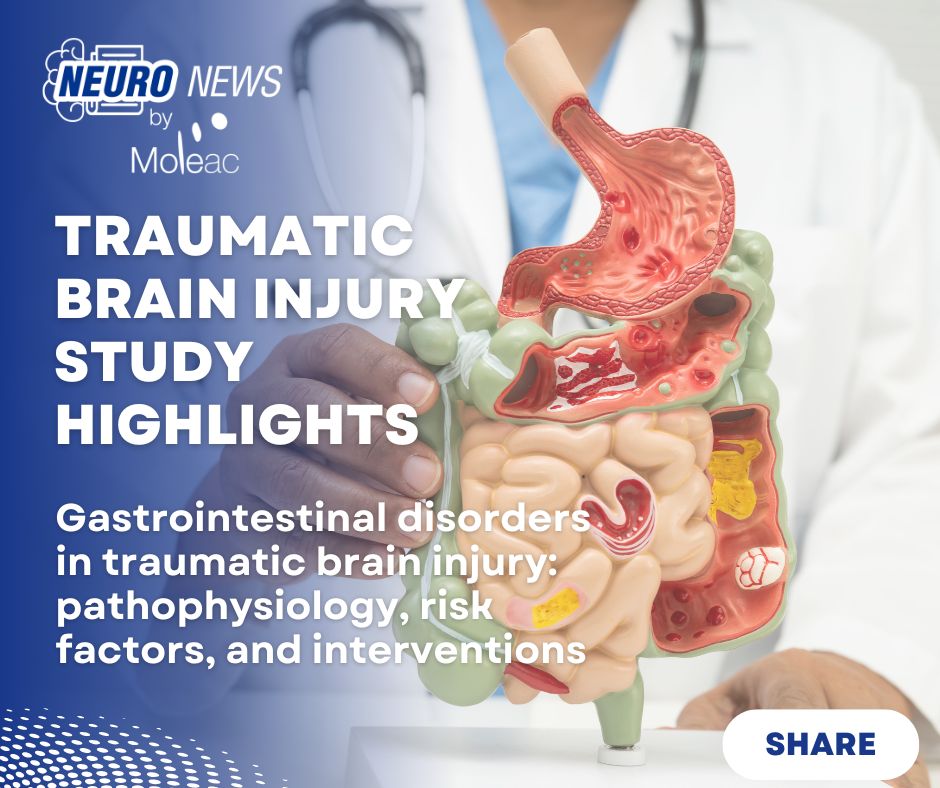
📰🧠🔬 TRAUMATIC BRAIN INJURY STUDY HIGHLIGHTS – Gastrointestinal disorders in traumatic brain injury: pathophysiology, risk factors, and interventions by Fu AY., et al.
Gastrointestinal (GI) dysfunction is increasingly recognized as a common complication after Traumatic brain injury (TBI). This review aims to improve understanding of the causes, risk factors, and management of GI disorders after TBI to support better clinical care.
𝗣𝗮𝘁𝗵𝗼𝗽𝗵𝘆𝘀𝗶𝗼𝗹𝗼𝗴𝘆 𝗮𝗻𝗱 𝗰𝗹𝗶𝗻𝗶𝗰𝗮𝗹 𝗲𝗳𝗳𝗲𝗰𝘁𝘀
GI dysfunction after TBI may occur due to autonomic nervous system dysfunction, increased intracranial pressure, and systemic inflammation. These changes can impair intestinal movement and nutrient absorption, leading to feeding intolerance and malnutrition. Possible indicators include high gastric residual volume, weight loss, low body mass index, and low albumin levels.
𝗧𝗿𝗲𝗮𝘁𝗺𝗲𝗻𝘁 𝗮𝗻𝗱 𝗰𝗮𝗿𝗲
Management strategies include nutritional screening, prokinetic medications that stimulate gut motility, and small bowel or transpyloric feeding. Early recognition and appropriate nutritional support may help improve recovery and overall patient outcomes.
📄 Access the full article at: Fu, A. Y., Elguindy, M. M., Manley, G. T., & Yue, J. K. (2025). Gastrointestinal disorders in traumatic brain injury: pathophysiology, risk factors, and interventions. Journal of neurosurgical sciences, 69(6), 469–480. https://www.minervamedica.it/en/journals/neurosurgical-sciences/article.php?cod=R38Y2025N06A0469. This is an open-access article under a CC BY-NC 4.0 license.
