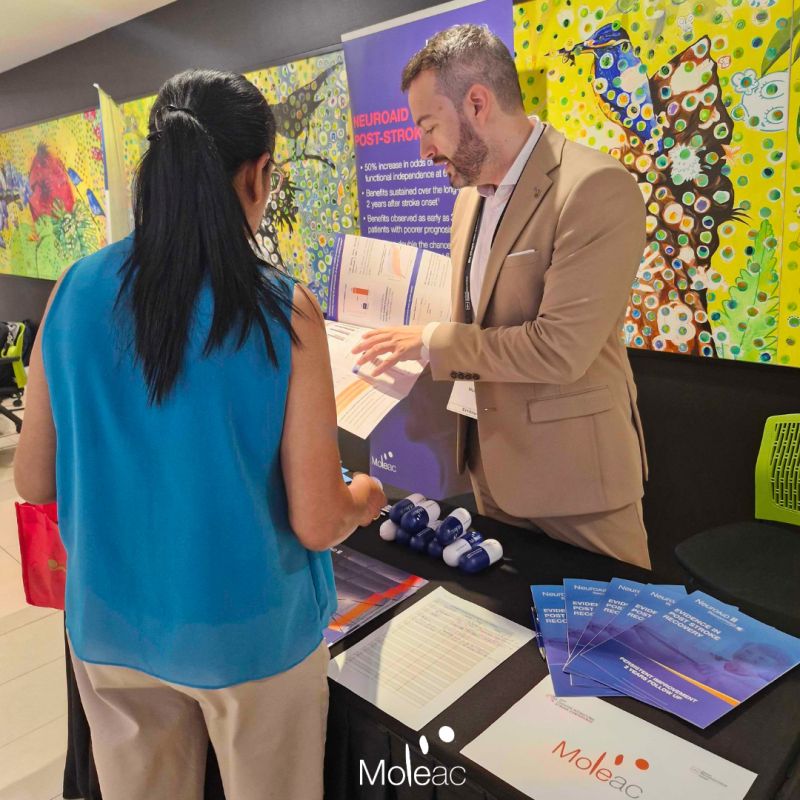
Moleac at SISC 2026: Advancing Stroke Care and Recovery
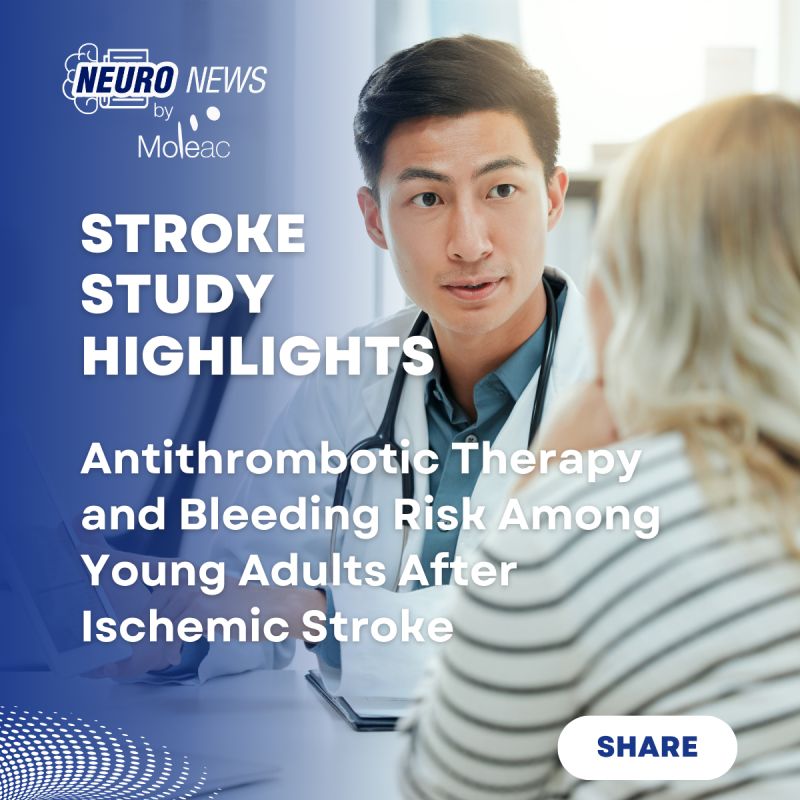
📰🧠🔬 STROKE STUDY HIGHLIGHTS – Antithrombotic Therapy and Bleeding Risk Among Young Adults After Ischemic Stroke by Rasing A, et al.
This study followed 1,226 adults aged 18-49 after a first ischaemic stroke to assess bleeding during antithrombotic treatment. The median follow-up was 4.2 years.
𝗪𝗵𝗮𝘁 𝗶𝘀 𝘁𝗵𝗲 𝗿𝗶𝘀𝗸 𝗼𝗳 𝗯𝗹𝗲𝗲𝗱𝗶𝗻𝗴 𝗮𝗺𝗼𝗻𝗴 𝘆𝗼𝘂𝗻𝗴 𝗮𝗱𝘂𝗹𝘁𝘀 𝗿𝗲𝗰𝗲𝗶𝘃𝗶𝗻𝗴 𝗮𝗻𝘁𝗶𝘁𝗵𝗿𝗼𝗺𝗯𝗼𝘁𝗶𝗰 𝘁𝗵𝗲𝗿𝗮𝗽𝘆 𝗮𝗳𝘁𝗲𝗿 𝗮𝗻 𝗶𝘀𝗰𝗵𝗮𝗲𝗺𝗶𝗰 𝘀𝘁𝗿𝗼𝗸𝗲?
𝗞𝗲𝘆 𝗳𝗶𝗻𝗱𝗶𝗻𝗴𝘀
The estimated five-year risk of bleeding requiring medical attention was 10.7%.
Women, patients with cardioembolic stroke and those receiving anticoagulants had higher bleeding risks.
Women’s increased risk was mainly explained by gynaecological bleeding.
Most bleeding events were minor; nine were major, with no bleeding-related deaths.
𝗞𝗲𝘆 𝘁𝗮𝗸𝗲𝗮𝘄𝗮𝘆𝘀
These findings indicate that young stroke survivors receiving antiplatelet or anticoagulant therapy face a substantial long-term risk of bleeding, which should be considered when evaluating the risks and benefits of long-term antithrombotic therapy.
📄 Access the full article at: Rasing A, Verburgt E, Ekker MS, et al. Antithrombotic Therapy and Bleeding Risk Among Young Adults After Ischemic Stroke. JAMA Netw Open. 2026;9(9): e2635826. https://jamanetwork.com/journals/jamanetworkopen/fullarticle/2854434?__cf_chl_rt_tk=ECSaKlNHaWJClvjwq_U3r6GCi4qTP2DsNqh6wUmno5A-1794290433-1.0.1.1-0qqFmPmkyEkNVmo64jskK_50hY70_F5CgeSlxj2Es3Y. This is an open-access article under a CC BY 4.0 license.